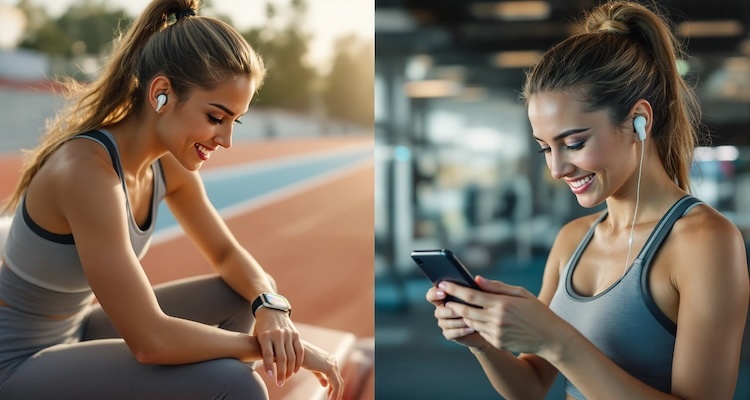
AI in sports is transforming how elite athletes manage their mental health, with the International Olympic Committee providing 2,000 Calm app licenses to support athlete wellbeing during competitions. This focus on mental fitness represents a significant shift in how sports organizations approach athlete care beyond physical training.
The application of AI in sports extends far beyond performance analytics. Athletes now have access to AI-powered platforms that continuously monitor progress, provide real-time feedback, and offer personalized recommendations. Specifically, the Paris 2024 Olympics featured AthleteGPT, a chatbot giving competitors round-the-clock guidance. Additionally, in professional leagues like the NFL, where over 200 players reported concussions in the 2023-2024 season, AI systems are being deployed to predict and prevent injuries.
These examples of AI in sports demonstrate how technology is creating psychologically safer environments for competitors. Furthermore, athletes themselves are actively involved in developing these systems, ensuring the future of AI in sports addresses their unique challenges. This collaboration between athletes and technologists is crucial as sports organizations implement comprehensive mental health support systems, including helplines offering assistance in over 70 languages for up to four years after major competitions.
Mental health discussions in elite sports have undergone a remarkable transformation in recent years. Once taboo and dismissed, athlete mental wellbeing now commands the same attention as physical health, largely due to courageous actions by high-profile competitors."You are not a drop in the ocean. You are the entire ocean in a drop." - Rumi, 13th-century Persian poet and Sufi mystic whose wisdom transcends time
The watershed moment occurred when gymnastics superstar Simone Biles withdrew from multiple events at the Tokyo Olympics, citing mental health concerns. "I have to focus on my mental health," Biles told journalists. "We have to protect our minds and our bodies and not just go out and do what the world wants us to do". Her decision sparked a global conversation about athlete mental health, with studies later showing that media coverage of Biles' withdrawal generated more social interactions than Meghan Markle and Prince Harry's interview with Oprah Winfrey.
Before Biles, tennis star Naomi Osaka had withdrawn from the 2021 French Open, prioritizing her mental wellbeing despite facing backlash. "Tennis is our privileged profession... but I can't imagine another profession where a consistent attendance record would be so harshly scrutinized," Osaka wrote in Time magazine.
Consequently, many athletes began speaking out. British gymnast Nile Wilson noted, "This could make a massive shift in gymnastics in talking about mental health, for her to say I'm not at the mental capacity to do the biggest event as the biggest star". Olympic gold medalist Michael Phelps, who struggled with depression after each of his five Olympic appearances, also publicly supported these athletes.
In response to this growing movement, the International Olympic Committee developed a comprehensive Mental Health Action Plan with five focus areas to be achieved by 2026: culture and leadership, measurement and research, reducing prevalence while improving wellbeing, improving care, and improving access to sport.
The plan emphasizes that "athletes' mental health needs are as important for their performance and wellbeing as their physical health needs". Moreover, the IOC recently published "Mental Health Guidelines for Major Sporting Events," providing organizers with a blueprint for implementing mental health support from planning through execution.
The technological revolution in sports has brought sophisticated AI tools designed specifically to monitor, manage, and support athletes' mental health needs.
Advanced wearable technology now offers athletes unprecedented insights into their emotional and mental states. WHOOP recently unveiled an AI Coach feature powered by OpenAI, analyzing biometric data to provide personalized feedback and mental health recommendations. Similarly, companies like Epicore Biosystems have partnered with major sports organizations including the Seattle Mariners and US Air Force to develop epidermal sensors for continuous biomarker monitoring. These devices track physiological signals such as heart rate variability, sleep patterns, and skin conductivity—all critical indicators of mental stress and recovery.
Quality sleep represents a cornerstone of mental wellness for elite athletes. Eight Sleep's Pod 5, an AI-powered sleep system, has transformed this aspect of recovery with features including immersive temperature control, zero-gravity elevation, and integrated surround-sound for science-backed audio therapy. The system continuously learns from a sleeper's biometrics and patterns, with 92% of users reporting improved sleep quality. Furthermore, its Health Check feature monitors cardiovascular and respiratory abnormalities during sleep without requiring wearable devices, allowing for preventative mental health interventions.
At the forefront of mental health support, AI-powered virtual assistants provide athletes with real-time emotional guidance. The International Olympic Committee has implemented a mental fitness helpline alongside 2,000 licenses for the Calm mindfulness app. Additionally, chatbots using sentiment analysis can detect emotional distress in athletes' responses and provide appropriate support. These systems offer confidential spaces for athletes to express concerns without fear of judgment or selection consequences.
Practical applications of AI for athlete mental wellness include "mentally fit zones" at Olympic villages—spaces designed for mental decompression. Meanwhile, AI systems now filter out social media abuse, protecting athletes from harmful content during competitions. Sports teams increasingly employ specialized AI tools that track mood, concentration levels, and anxiety patterns, allowing for personalized interventions before mental health issues affect performance.
"You are your best thing." - Toni Morrison, Nobel Prize-winning novelist and influential literary figure
First and foremost, athlete input ensures that mental health technologies are both relevant and effective. According to research, co-design of digital mental health technologies has been lacking despite evidence that stakeholder involvement throughout development is crucial. Principally, when athletes participate in creating these systems, adoption rates increase as the tools better reflect their actual needs rather than presumed ones. This collaboration helps bridge the gap between technology developers and the sporting community, creating solutions that truly resonate with athletes' lived experiences.
Paralympic gold medalist Samantha Bosco, born with a bowed tibia that led to childhood leg amputation, embraced data analytics to fine-tune her performance. As a self-proclaimed "data nerd" with a master's in accounting, she used Microsoft Copilot to analyze sleep patterns and nutrition, calling it "like having my own personal assistant".
Notably, Olympic sprinter Kendall Ellis, who has spoken openly about her anxiety since childhood, utilized data tracking to identify how social activities affected her mental state. Through analysis, she discovered that connecting with friends before competitions—contrary to traditional advice about avoiding "distractions"—actually improved her mental wellbeing.
Initially skeptical, Paralympic tandem cyclist Skyler Espinoza eventually tracked resting heart rate, mood, and travel impacts. After noticing trends of lower moods when traveling, she implemented targeted self-care strategies, evidently making data-driven decisions about her post-Games career transition.
Personalization represents the cornerstone of effective AI implementation in sport psychology. Indeed, according to Phillippa Thomson, chief data scientist at Parity, "Generative AI has the ability to democratize access to data analytics capabilities that have been fairly expensive to access". Hence, previously underserved athletes, particularly women, now benefit from these powerful tools. Coupled with the hybrid model of care—combining face-to-face interactions with digital interventions—AI systems continuously adapt to athletes' evolving needs, creating truly individualized mental health support frameworks.
While technological innovations transform athletic performance and mental health support, the rapid implementation of AI in sports raises significant ethical questions that must be addressed.
The collection of athlete data through wearables, tracking systems, and performance analytics creates complex privacy challenges. A fundamental question remains unresolved: who actually owns this data—the athlete, the sports organization, or the company that compiles it? Athletes often provide extensive personal information including health metrics, performance data, and even neural information through Brain Computer Interfaces (BCIs), which represent a major privacy concern.
First and foremost, personal and sensitive information from athletes—including medical records, IDs, and physiological measurements—frequently becomes training material for machine learning systems without proper protection frameworks. In response, blockchain technology has been proposed as a solution, offering tamper-proof records of sensitive activities while giving athletes control through private and public keys.
Beyond privacy concerns lies the challenge of balancing performance optimization with athlete mental health. Though AI-powered systems can provide valuable insights for training and recovery, there is growing concern about over-reliance on technology. Continuous monitoring may create psychological pressure that undermines the very mental wellbeing these systems aim to support.
To illustrate, athletes report experiencing varying physical performance related to different phases of their menstrual cycle, yet comprehensive tracking of such data raises questions about boundaries between necessary monitoring and invasive surveillance. Additionally, AI systems designed to detect signs of mental distress must avoid creating a culture of excessive monitoring at the cost of recovery and autonomy.
Looking forward, the integration of AI in sports offers promising opportunities alongside potential risks. The Sports 4.0 framework - emerging from Industry 4.0 principles - promises personalized injury prevention, diagnosis, management, and rehabilitation with individual-centric care. However, this future depends on maintaining athlete autonomy within increasingly data-driven environments.
For instance, AI technologies like virtual reality and augmented reality are increasingly utilized to create interactive rehabilitation programs, potentially enhancing athlete engagement and recovery precision. Yet the key challenge remains ensuring these systems serve athletes rather than constraining their agency. Ultimately, successful implementation will require viewing AI as a tool that augments human capabilities rather than replaces them—striking a careful balance between technological advancement and preserving the human element in sports.
As elite sports continue to embrace technological advancements, AI stands at the forefront of a significant shift in athlete mental health support. Previously ignored or stigmatized, mental wellbeing now receives equal attention alongside physical training, largely due to courageous advocates like Simone Biles and Naomi Osaka. Their public stances essentially created a watershed moment for sports psychology.
AI tools have certainly transformed how athletes manage their psychological state. Wearables track biometric indicators of stress, sophisticated sleep systems optimize recovery, and virtual assistants provide immediate emotional support without judgment. Furthermore, these technologies offer unprecedented personalization, adapting to individual needs rather than applying one-size-fits-all approaches.
The most promising developments emerge when athletes actively participate in technology creation. This collaboration ensures tools address real needs rather than presumed ones. Samantha Bosco, Kendall Ellis, and Skyler Espinoza demonstrate how athlete involvement leads to more effective, personalized systems that genuinely improve mental wellbeing.
Ethical considerations nonetheless remain crucial barriers to overcome. Questions about data ownership, privacy protection, and the balance between performance optimization and psychological pressure require thoughtful solutions. The Sports 4.0 framework offers a promising path forward, though successful implementation depends on maintaining athlete autonomy within increasingly data-driven environments.
The future relationship between AI and athlete mental health will ultimately depend on viewing technology as a supportive tool rather than a replacement for human connection. When properly implemented, these systems create psychologically safer environments for competitors while enhancing performance. The goal remains clear: AI should serve athletes, not control them—augmenting human capabilities while preserving what makes sports profoundly human.
Q1. How are elite athletes using AI to support their mental health? Elite athletes are utilizing AI-powered tools such as wearables for mood tracking, advanced sleep monitoring systems, and virtual assistants for emotional support. These technologies provide personalized insights, real-time feedback, and continuous monitoring of mental well-being, helping athletes manage stress, optimize recovery, and maintain psychological balance during training and competitions.
Q2. What role do athletes play in developing AI systems for mental health? Athletes are increasingly involved in co-designing AI systems for mental health support. This collaboration ensures that the tools address their specific needs and challenges. For example, athletes like Samantha Bosco and Kendall Ellis have actively participated in shaping AI technologies to track sleep patterns, nutrition, and social activities, making the solutions more relevant and effective for their mental well-being.
Q3. How has the focus on mental health in elite sports evolved in recent years? Mental health has become a priority in elite sports, largely due to high-profile athletes like Simone Biles and Naomi Osaka speaking out about their struggles. This shift has led to increased awareness, reduced stigma, and the development of comprehensive mental health action plans by organizations like the International Olympic Committee, emphasizing that athletes' mental well-being is as crucial as their physical health.
Q4. What ethical concerns arise from using AI for athlete mental health? Key ethical concerns include data privacy and ownership issues, as athletes' personal and health information is collected and analyzed. There's also a challenge in balancing performance tracking with mental well-being, as continuous monitoring may create psychological pressure. Ensuring athlete autonomy and preventing over-reliance on technology are crucial considerations in the implementation of AI systems in sports.
Q5. How does AI in sports contribute to creating psychologically safer environments for athletes? AI contributes to psychologically safer environments by providing personalized mental health support, filtering out harmful social media content during competitions, and creating "mentally fit zones" in competition venues. These technologies offer confidential spaces for athletes to express concerns without fear of judgment, while also helping teams and coaches identify and address potential mental health issues before they impact performance.