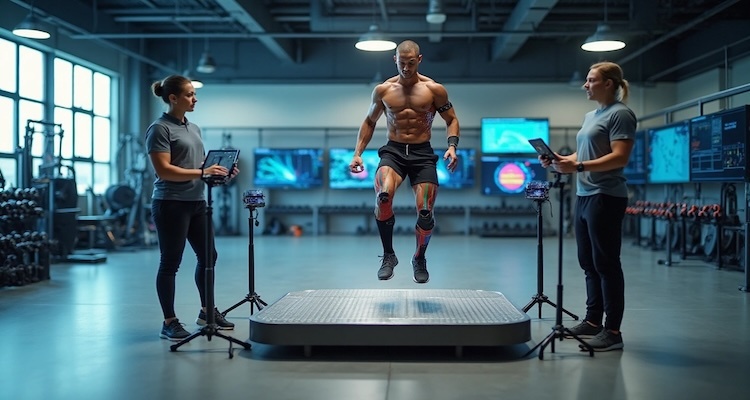
Did you know the average English Premier League team loses approximately £45 million per season due to injury-related performance reductions? AI in sports injury prevention is transforming how top teams manage athlete health, shifting focus from reactive treatment to proactive risk management.
We're witnessing a significant change in how sports injuries are handled. While traditional approaches often address injuries after they occur, AI and machine learning now analyze vast amounts of data to identify risks before they become problems. In the UK alone, about 1.5 million people visit emergency departments yearly due to sports-related injuries, with one-third reporting long-term effects. However, current trends in sport injury prevention show promising results through technology integration.
Furthermore, AI systems continuously track athletes' conditions during training and competition, alerting coaches and medical staff to potential risks before they escalate. Specifically, techniques like Random Forests and Convolutional Neural Networks help predict injury risks by analyzing data from wearable devices, biomechanical assessments, performance metrics, and psychological factors. This comprehensive approach creates individualized athlete profiles, enhancing safety, optimizing performance, and reducing human error in medical decisions.
In this article, we'll explore how leading sports organizations leverage these advanced technologies and what we can learn from their injury prevention strategies.
Top sports organizations are increasingly adopting sophisticated AI algorithms to prevent injuries and extend athletes' careers. These advanced techniques extract meaningful patterns from complex data that would be impossible to identify manually.
Elite teams now utilize Random Forest (RF) algorithms to predict overuse injuries with remarkable accuracy. This ensemble learning technique generates multiple decision trees and combines their results, making it particularly effective for identifying non-linear patterns in injury data. In a recent study, RF models outperformed traditional logistic regression with prediction accuracy reaching 89.3% compared to 84.2% for logistic regression.
What makes RF algorithms particularly valuable is their ability to identify key injury risk factors. When applied to injury prediction in short-track speed skating, these models highlighted training completion rates, lower limb and trunk/lumbar injury history, and athlete fatigue as the most important variables. Additionally, studies examining sports-related dental injuries found that mouthguard use and awareness were the most critical factors according to RF variable importance metrics.
Convolutional Neural Networks (CNNs) excel at analyzing visual data, making them ideal for biomechanical assessment. These networks process video footage to extract movement patterns that may indicate injury risk. In tennis performance evaluation, CNN-based algorithms achieved significantly higher precision (87.49%), recall (78.58%), and F1 scores (82.8) compared to traditional algorithms like GMM, VIBE, and OF.
CNNs also demonstrate remarkable capabilities in gait analysis. One study using OpenPose to identify skeletal joint information from video achieved a correlation of 0.75 when predicting the Gait Deviation Index, closely matching the intraclass correlation coefficient of 0.81 reported for children with cerebral palsy. Moreover, CNNs have successfully predicted whether patients received single-event multilevel surgery with an AUC of 0.71, slightly outperforming logistic regression models based on motion capture data.
Recurrent Neural Networks excel at processing sequential data, making them invaluable for tracking athlete fatigue over time. Unlike other algorithms, RNNs maintain "memory" of previous inputs, allowing them to identify patterns in time-series data from wearable sensors that monitor heart rate variability, training volume, and muscle fatigue indicators.
In manufacturing applications that parallel sports monitoring, RNN-based fatigue detection systems have achieved accuracy rates exceeding 92% when analyzing data collected every 10 minutes. These systems process information from inertial sensors through Discrete Wavelet Transform techniques before classification, creating an approach applicable to athlete monitoring.
Although not directly predicting injuries, GPT-4 serves as a powerful support tool for medical teams by synthesizing vast amounts of text-based information. This advanced AI model processes medical records, injury reports, and research papers to provide comprehensive summaries and data-driven recommendations.
In sports medicine specifically, GPT-4 demonstrates superior performance compared to earlier models in clinical decision-making for sports surgery and physiotherapy. Medical staff can leverage GPT-4 to extract key insights from player health records and training logs, enhancing recovery protocols and injury prevention strategies. Furthermore, studies indicate GPT-4 can assist in diagnostic imaging, exercise prescription, and scientific research, potentially becoming an indispensable scientific assistant for sports medicine practitioners.
Each of these AI techniques addresses different aspects of injury prevention, creating a comprehensive system when used together. The integration of these tools allows sports organizations to shift from reactive treatment to proactive risk management, ultimately extending athlete careers and improving team performance.
Behind every effective AI injury prediction system lies a wealth of data. The quality, variety, and integration of these data sources directly impact the accuracy and reliability of injury prevention models.
Wearable technologies have revolutionized data collection by enabling the gathering of quantitative biomechanical data unobtrusively, for extended periods, and with fewer spatial limitations than conventional methods. These devices are increasingly valuable as they're small, portable, minimally intrusive, affordable, and capable of providing real-time feedback.
Heart rate monitoring remains a cornerstone of internal load assessment. Standard heart rate monitors use chest straps that transmit to wireless displays, while newer optical sensor devices can detect heart rate from the wrist or fingertip. The linear relationship between heart rate and oxygen consumption makes these devices essential for estimating exercise intensity and energy expenditure.
Meanwhile, GPS-based units deliver multiple metrics on physical exertion with millisecond granularity. In fact, 18% of studies analyzing injury risk utilized external load data from wearable electronic performance tracking systems. These devices capture crucial variables including velocity, acceleration, deceleration, and positional data that AI models can process to identify injury risks.
Consequently, metrics like Player Load have emerged as significant indicators of injury risk. Player Load—defined as the instantaneous rate of change of acceleration divided by a scaling factor—was used as a primary outcome in nearly half of injury prediction studies. This metric helps in customizing training according to sport-specific demands and player positions.
Motion capture systems represent the gold standard for analyzing movement patterns associated with injuries. Research on anterior cruciate ligament (ACL) injuries, for instance, has utilized 10 stereophotogrammetric cameras synchronized with force platforms to record precise 3D motion data.
Notably, affordable alternatives to traditional motion capture systems are emerging. One study employed an infrared depth sensor with a capture rate of 30 frames per second to track 3-dimensional movement, achieving intraclass correlation coefficient values between 0.771 and 0.917 when compared to gold-standard systems. This technology demonstrated impressive prediction capabilities with an AUC of 0.92 for peak contact angle measurements in drop vertical jump tests.
The processing of motion data typically involves marker trajectories collected through cameras and interpolated through spline-based algorithms. This allows for detailed analysis of frontal, transverse, and sagittal plane kinematics throughout movement. For instance, in 2D video-analysis, metrics such as Foot Projection Angle, Frontal Plane Knee Projection Angle, Pelvis tilt Angle, and Trunk tilt Angle provide valuable insights into injury risk.
Beyond physical measurements, comprehensive injury prevention models incorporate subjective metrics and recovery data. Ratings of perceived exertion (RPE) and session RPE appeared in 29% of injury prediction studies, while 16% gathered scores related to self-perceived wellness including sleep quality, stress, and muscle soreness.
The training impulse (TRIMP) has become a useful measure of training load, calculated using training duration and heart rate data during exercise sessions. Further derivations like Edwards' TRIMP and Lucia's TRIMP model offer more nuanced analysis by using heart rate zones with weighting factors.
Sleep quality monitoring has proven essential for early detection of potential issues. Simple diaries indicating hours of sleep and perceived quality provide basic insights, whereas actigraphy devices using accelerometry offer more detailed data on bedtime, wake time, sleep onset latency, and sleep efficiency over 7-14 day periods.
Integration of these diverse data sources significantly improves prediction accuracy. Models using screening data alone achieved an average AUC of 0.73, while performance increased to an average AUC of 0.77 when more granular methods of athletic monitoring were analyzed. Furthermore, comprehensive models incorporating physiological data, psychological factors, training records, and environmental variables have reached AUC values of 0.85 on test sets.
Sport-specific AI applications address unique injury patterns across different athletic disciplines. Each implementation demonstrates how AI adapts to particular biomechanical demands and injury risks.
Hamstring injuries have skyrocketed in professional football, with reports indicating a staggering 90% increase this season. To combat this trend, teams are deploying AI-driven forecasting systems like Zone7, which predicted increased injury risk 1-7 days before 72.4% of actual injuries occurred across 11 professional teams. Nevertheless, ACL injury prediction remains challenging, as even sophisticated machine learning models using extensive biomechanical measurements achieve only modest accuracy (mean AUC-ROC of 0.63).
Basketball's repetitive jumping motions create distinct injury patterns, especially tendinopathies. Indeed, researchers have developed a novel "weighted jump height" metric that considers each jump's potential tissue damage impact. This approach revealed that injured youth basketball athletes typically displayed low 3-4 week workloads followed by high 1-week workloads before injury occurred. Basketball analytics software now enables coaches to manage jumping workloads effectively, helping prevent injuries while optimizing performance.
For runners, AI-powered gait analysis has become accessible through platforms like Ochy, which uses computer vision to analyze running biomechanics with just a smartphone camera. First, the system captures a 10-second video of the runner in motion. Afterward, proprietary AI algorithms track key metrics including stride length and joint angles. Finally, the platform generates tailored exercise recommendations to enhance efficiency and reduce injury risk. This technology works both outdoors and on treadmills, democratizing access to professional-grade biomechanical analysis.
Alpine skiing presents unique injury prevention challenges, especially for knee injuries. Conventional mechanical bindings effectively prevent tibia fractures but offer limited knee protection. As a solution, mechatronic ski bindings incorporate AI-driven systems that process five key inputs: knee flexion angle, thigh muscle activity, foot pressure, skiing velocity, and skier demographics. These smart bindings continuously adapt retention settings based on real-time risk assessment, potentially reducing injury rates without compromising performance. Preliminary simulations showed promising results, with the system recommending binding adjustments in four of six analyzed ACL injury cases.
Real-time monitoring represents the cutting edge of AI in sports injury prevention, shifting decisions about athlete safety from reactive to proactive. Teams now receive instant insights into potential injuries before they occur, dramatically changing how return-to-play decisions are made.
Contact sports utilize specialized AI systems to track potentially dangerous impacts in real time. Rugby Australia has implemented AI-powered monitoring specifically designed to track collision impacts and provide immediate concussion risk alerts. These systems serve as an additional set of eyes for sideline personnel, identifying heavy hits that might cause concussions even when symptoms aren't immediately visible. Impact sensors embedded in equipment continuously transmit data via Bluetooth connection to sideline devices, creating an essential technological solution to the chronic problem of symptom under-reporting by athletes.
Deep learning models now monitor athlete recovery with remarkable precision. The redefined prairie dog optimized bidirectional long-short-term memory (RPDO-Bi-LSTM) approach for tracking sports injury recovery has achieved impressive metrics: 94.2% accuracy, 98.2% recall, 96.5% precision, and 95.2% specificity. This technology processes data from wearable sensors through sophisticated algorithms, creating recovery profiles that continuously adjust as new information becomes available. Unlike traditional methods, AI systems can analyze large patient datasets within seconds, far surpassing human capabilities. One particularly valuable application is in monitoring post-concussion recovery in contact sports, where AI provides valuable data for determining safer return-to-play timelines based on cumulative impacts.
AI-driven personalized rehabilitation represents a significant advancement in sports medicine. The advanced penguin search optimized efficient random forest (APSO-ERF) approach for customized sports injury rehabilitation has demonstrated exceptional performance: 97.80% accuracy, 96.01% sensitivity, 97.90% specificity, 98.88% precision, and 97.50% F1-score. These systems create tailored recovery plans based on individual athlete data, subsequently adjusting therapy intensity and methods according to performance data throughout rehabilitation. Rather than applying standardized protocols, AI adapts to each athlete's unique physiological needs and healing patterns. Ultimately, this technology not only accelerates recovery times but simultaneously protects athletes' physical and psychological wellbeing, facilitating safer returns to competition.
Despite promising advancements in AI-driven injury prevention, several critical challenges limit their widespread adoption and effectiveness. These hurdles extend beyond technical limitations to ethical concerns that require careful consideration.
Professional athletes have become true "data producers," generating vast amounts of biometric and performance information through wearable sensors and analytical software. This data collection raises significant privacy concerns, primarily regarding contractual discrimination. Athletes with data showing greater injury predisposition might be denied contracts or sponsorships. Furthermore, continuous surveillance through AI tools creates pressure and anxiety among athletes, affecting their mental wellbeing and performance. The collection and use of AI-driven data typically happen in the background, with athletes not fully aware of what's being collected or how it will be used. In essence, health data is considered sensitive personal data under regulations like UK GDPR, requiring special protection and informed consent.
The efficacy of machine learning in sports is often hampered by small datasets and methodological inconsistencies. A recent study published in Sports Medicine found that 98% of sports models had a high risk of bias, with most using small sample sizes that result in misleading conclusions. To address class imbalance issues (far more non-injury than injury data points), 39% of studies applied sampling techniques. Yet these methods introduce their own problems—oversampling with techniques like SMOTE creates synthetic injury instances that risk overfitting, whereas undersampling causes unwanted data loss.
The complexity of AI models, particularly deep learning algorithms, poses substantial challenges for interpretation and transparency. Many systems operate as "black boxes" - opaque even to their creators. Given this complexity, only 18% of reviewed studies applied model interpretability techniques. Techniques like Shapley values from cooperative game theory can assign partial responsibility to different parts of the architecture based on their impact. Without such explainability, sports medicine teams struggle to trust and implement AI recommendations, regardless of their technical accuracy.
AI-driven injury prevention represents a paradigm shift in sports medicine, transforming how teams safeguard their most valuable assets - the athletes themselves. Throughout this article, we explored how elite sports organizations leverage sophisticated algorithms like Random Forests and CNNs to predict injuries before they occur, ultimately reducing both financial losses and career-threatening setbacks. In short, integrating expert data and analytics services to unlock deeper insights and enhance decision-making capabilities.
Data clearly stands as the foundation of these AI systems. Wearable sensors track physiological metrics with millisecond precision, while motion capture systems analyze movement patterns associated with specific injuries. Furthermore, comprehensive models integrate subjective measures like sleep quality and perceived exertion, creating holistic athlete profiles that significantly improve prediction accuracy.
Sport-specific applications demonstrate how AI adapts to unique biomechanical demands across different disciplines. Football teams focus on preventing costly hamstring and ACL injuries, basketball organizations monitor jump loads, runners benefit from real-time gait analysis, and skiers rely on mechatronic bindings that adjust based on real-time risk assessment.
Perhaps most significantly, these technologies enable immediate interventions through real-time monitoring. Rather than waiting for symptoms to appear, medical staff receive instant alerts about potential issues, allowing for proactive adjustments to training loads or technique. Similarly, return-to-play decisions now rely on objective data rather than subjective assessments, ensuring athletes return to competition only when truly ready.
Certainly, challenges remain before AI reaches its full potential in injury prevention. Privacy concerns merit careful consideration, particularly regarding how athlete data might affect contract negotiations. Likewise, biases in training data and limited interpretability of complex models present ongoing technical hurdles.
Despite these obstacles, the trajectory appears clear. As algorithms improve and data collection becomes more sophisticated, AI will undoubtedly become an indispensable tool for sports organizations aiming to keep their athletes healthy and performing at peak levels. The convergence of sports science, medicine, and artificial intelligence therefore promises not just better performance outcomes but also longer, healthier athletic careers.
Q1. How does AI help prevent sports injuries? AI analyzes data from wearable sensors and biomechanical assessments to predict injury risks before they occur. It monitors factors like heart rate, movement patterns, and fatigue levels, allowing coaches to adjust training loads and prevent overuse injuries.
Q2. What AI techniques are used in sports injury prevention? Top sports teams use various AI techniques including Random Forests for predicting overuse injuries, Convolutional Neural Networks for biomechanical video analysis, Recurrent Neural Networks for monitoring fatigue over time, and GPT-4 for synthesizing medical reports and research.
Q3. How does AI assist in return-to-play decisions? AI-driven systems track recovery progress using deep learning models, providing real-time data on an athlete's condition. This helps medical staff make more informed decisions about when an athlete is ready to return to competition, reducing the risk of re-injury.
Q4. Are there sport-specific AI applications for injury prevention? Yes, AI applications are tailored to specific sports. For example, in football, AI predicts hamstring and ACL injuries. In basketball, it monitors jump load and fatigue. For runners, AI performs real-time gait analysis, while in skiing, mechatronic bindings use AI to prevent knee injuries.
Q5. What challenges exist in AI-driven injury prevention? Key challenges include data privacy concerns, potential biases in training data, and the interpretability of complex AI models. There are also ethical considerations regarding how athlete data might affect contract negotiations and the psychological impact of continuous monitoring on athletes.
This is a Sponsored Post